Truth and Reconciliation at the AWG
By Sarahlily Inger Stein
It’s the first time I’ve heard Inuktitut in person. I’m sitting in the Kwanlin Dun Cultural Center, sanding a moose antler earring, and listening to Whitehorse-based carver Gary Tautenhahn speaking with two young athletes from Nunavik.
Earlier this week, riding the bus to Mount McIntyre, I watched a group from Team Kalaallit (Greenland) run alongside the bus, finally catch up to it, and joke around with each other in Kalaallisut (Greenlandic). Later that day at the opening ceremony, I listened to the Canadian national anthem sung in Southern Tutchone by the Whitehorse Community Choirs.
The Games are in full swing, and like many of us, I am caught up in the excitement of the cultural exchange. The AWG is a space for celebrating Northern cultures, many of them Indigenous. Bringing together people from the circumpolar North has given visibility to Indigenous cultures, both in the big, planned moments – like the spectacular opening ceremony – and in moments as quiet as catching the bus.
But the AWG is also tasked with balancing the seriousness of why so few of us in Canada hear Indigenous languages in daily life.
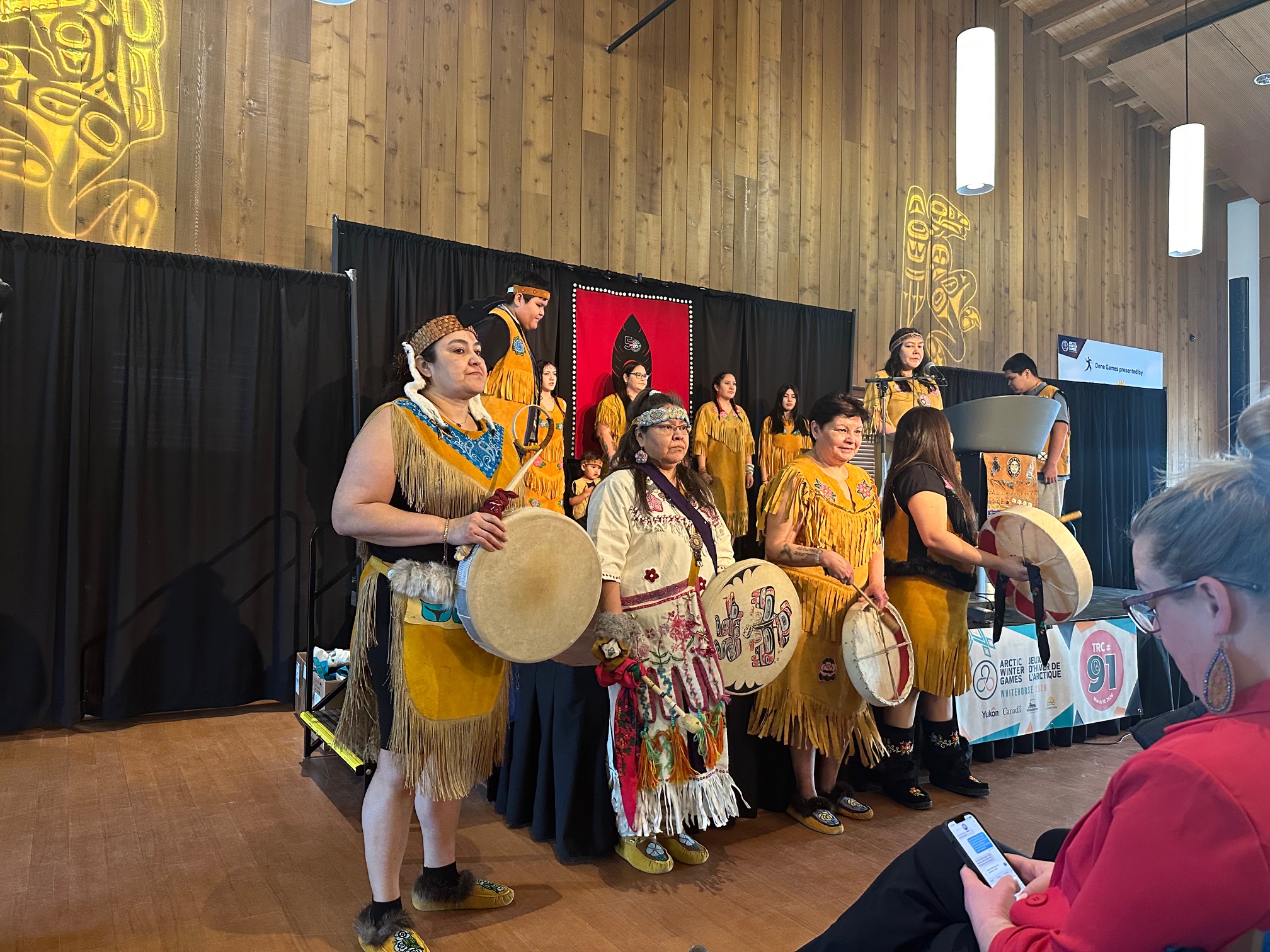
On Tuesday morning, the Host Society held a celebration of Truth and Reconciliation Day. Elders, youth and guests from near and far gathered to honour survivors, reflect on shared histories, and strengthen relationships through ceremony and community.
For those unfamiliar, Truth and Reconciliation Day, a national holiday in Canada that takes place on September 30th, commemorates the dark history and lasting effects of the residential school system, which forcibly separated Indigenous children from their families and communities and punished them for speaking their languages and practicing their cultures. There are 94 Truth and Reconciliation calls to action aimed at making societal changes to address the harmful legacy of residential schools and move forward in a way that respects and celebrates Indigenous cultures.
The AWG is focusing on #91 - We call upon the officials and host countries of international sporting events such as the Olympics, Pan Am, and Commonwealth games to ensure that Indigenous peoples’ territorial protocols are respected, and local Indigenous communities are engaged in all aspects of planning and participating in such events.
“For us,” said AWG International Committee President John Rodda, “This means continuing to listen, to learn, and to ensure that Indigenous voices, cultures, and traditions remain central to the Arctic Winter Games."
“It’s important for the youth to see that it’s not just a book, it’s not just calls to action,” said Rose Inglangasuk, the chair for the Truth and Reconciliation committee for the AWG 2026 Host Society. “It’s very important for Indigenous youth to see that we’re trying to make something happen.”
That’s why this year the AWG Truth and Reconciliation Committee has started Mobile 91. The Mobile 91 unit takes the committee out to talk to athletes, coaches, spectators, and volunteers about Truth and Reconciliation. If you see the AWG mascot Michael Jay, the committee members are likely nearby. “Reconciliation can be heavy, a heavy topic,” said Inglangasuk. “We wanted it to be uplifting. And so, we’re honoring people with gifts.” If you research call to action # 91 – even on your phone – and tell the committee what you’ve learned, you can receive a shirt. The goal is to give people a pathway to educate themselves about Truth and Reconciliation.
And, for the pin traders among us, keep your eye out for Pin 91.
.JPEG)
other Recent updates
Mt. Sima GM invites the Secretary of State for Sport Adam van Koeverden to snowboard, discuss the future of sport tourism in the Yukon

Remarque :
La traduction française du site est générée automatiquement et peut ne pas être totalement exacte.
please note :
French translation on the site is auto generated and may not be fully accurate.
Should there be an issue with the translation, please email info@awg2026.org